CARNIVORE RESEARCH
My primary focus is on movement ecology, with a particular interest in research emphasizing conflict, coexistence, and conservation within a landscape context.
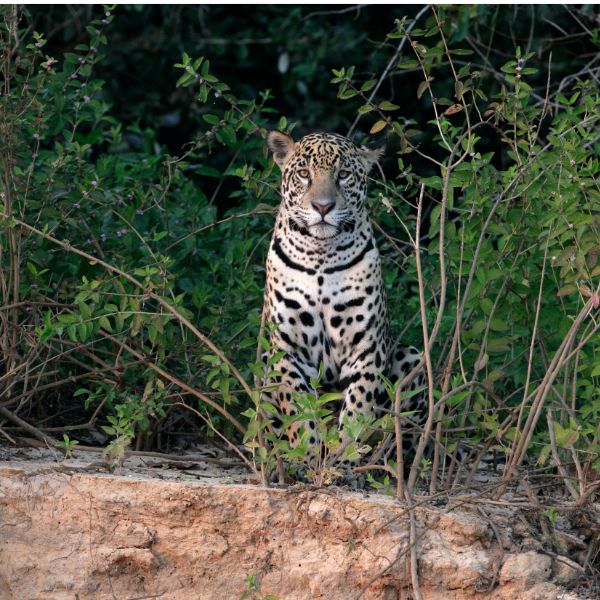
The Jaguar in Human-Dominated Landscapes: Adaptation and Conservation
Jaguars face increasing challenges in landscapes altered by human activities. Through this research, I have analyzed how they select their habitat and how fragmentation, roads, and agricultural expansion influence their movement.
🔹 Selection of Anthropogenic Resources – We investigated how males and females adjust their behavior based on human density and time of day. Jaguars live in landscapes of fear, where human and livestock density shapes their behavior. However, they also exhibit unexpected attraction to specific human-modified structures, such as croplands and roads, depending on sex and time of day. These findings are crucial for developing conservation strategies that promote coexistence in the Neotropics.
🔹 Movement Patterns – Our analysis shows that jaguars frequently use forest edges and agricultural zones but avoid large croplands and increase their speed near roads, highlighting the risks they face in human-modified landscapes. These insights are essential for managing ecological corridors and improving land-use planning.
🔹 Environmental and Human Factors – At the distribution level, we found that home range size decreases with increasing forest cover and primary productivity but expands with higher road density. These results provide key information for large-scale jaguar conservation efforts.
These studies offer valuable insights into jaguar adaptation to human-dominated landscapes and inform strategies for their conservation. More findings are on the way!
Check for more at Publications! or get in touch!
Predators and Prey: Unraveling the Dynamics of Interaction in the Landscape
Understanding how large carnivores interact with their prey is essential for ecosystem conservation. Our studies on predator-prey relationships, particularly between large carnivores and their prey, reveal dynamic movement patterns that challenge our understanding of species coexistence in the landscape.
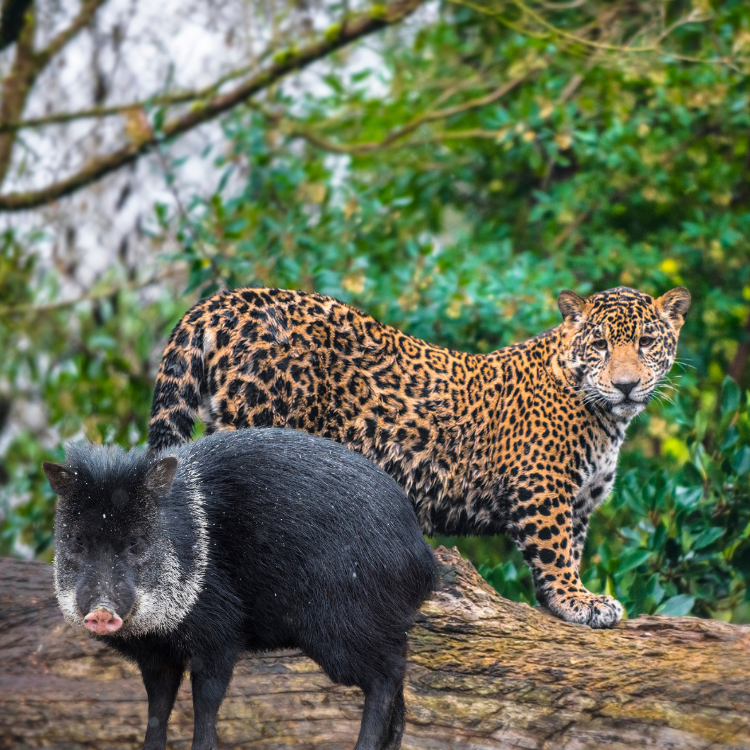
– Jaguar and Peccary: Movement Interactions
In the Pantanal, we explored how landscape structure shapes the interactions between jaguars (Panthera onca) and white-lipped peccaries (Tayassu pecari). Through the analysis of GPS movement data, we demonstrated that the distance to grasslands and prey density are key factors influencing the frequency and nature of these encounters. Additionally, we observed that lower peccary densities increase the likelihood of interactions with jaguars, highlighting the importance of resource distribution in the ecology of these predators.
While these findings provide valuable insights into the movement ecology of jaguars and their prey, many questions remain unanswered regarding how land-use changes and habitat fragmentation will alter these interactions in the future.
We continue to expand our research to include other species and ecological scenarios, whose results will soon come to light. Our work underscores the importance of approaching the conservation of large carnivores with a focus on landscape connectivity and prey availability. Studies like this allow us to develop more effective strategies to mitigate the effects of environmental change and ensure the persistence of fundamental ecological interactions.
Check for more at Publications! or contact me!
Felid Ecology and Conservation
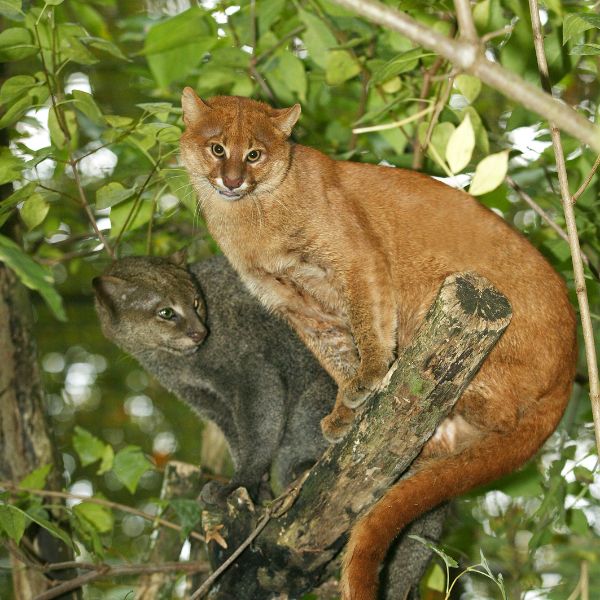
My research focuses on the spatial ecology of the Felidae family, particularly investigating how wild cats navigate and adapt to rapidly changing environments across the Neotropics. I work extensively with open-access data integration and spatial analysis to understand species-habitat relationships, movement patterns, and conservation needs of these elusive carnivores. Through collaborative approaches that combine large-scale datasets with robust statistical modeling, I aim to bridge knowledge gaps that limit effective conservation planning for felid species in tropical regions.
Brazil’s nine wild felid species face unprecedented conservation challenges as their habitats undergo rapid transformation. This research revealed striking interspecific variations in how these species respond to roads, agriculture, and habitat fragmentation through a comprehensive analysis of over 14,000 occurrence records. By classifying species into functional groups based on ecological plasticity, we identified distinct patterns that challenge assumptions about uniform responses within taxonomic groups. While some species, like pumas, showed remarkable adaptability to modified environments, others, including margays and tiger cats, demonstrated strict dependence on forest cover, highlighting the urgent need for species-specific conservation strategies rather than broad taxonomic approaches.
Check for more details in Publications! or contact me for the full article.
Questions, requests, or what you want to share regarding the topic…
Please send me an email or be in contact