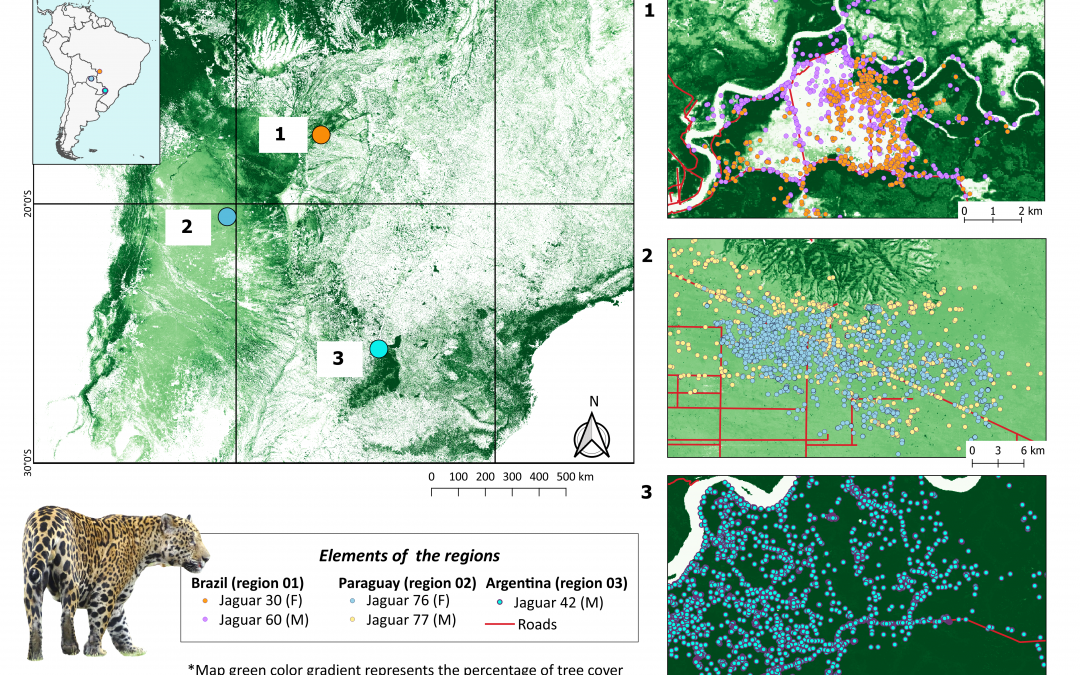
Main figure: Example of the predominance of road use in jaguars, in three different regions. 1) In Brazil and 2) in Paraguay. Jaguar photo by Eduardo Fragoso
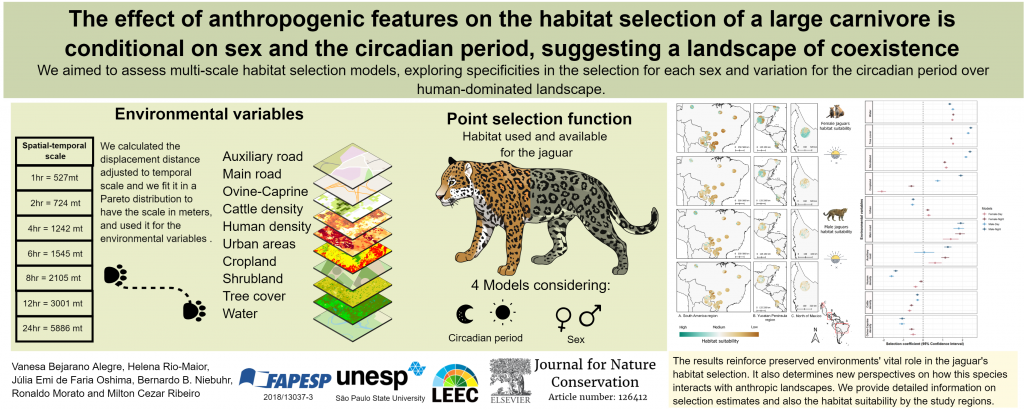
In this recent research, published in the Journal for Nature Conservation, We explored the intricate relationship between the jaguar (Panthera onca) and its habitat in a landscape increasingly shaped by human activities. Recognizing the jaguar’s significance as an apex predator and a symbol of the Americas’ rich biodiversity, this study focused on jaguar habitat selection and how this feline navigates the complexities of a human-modified landscape. By employing a multi-scale approach, we investigated the jaguar’s habitat preferences across its wide distribution range, considering both natural and anthropogenic factors that influence its selection.
Preferences and the Role of Natural Areas
Despite the relentless pressures of human expansion, jaguars show a remarkable capacity to adapt to modified landscapes. Yet, their long-term survival remains closely tied to the presence of natural habitats. Forested areas with dense vegetation and access to water continue to be essential for their persistence, offering not only food and shelter but also a vital refuge from potential conflicts with humans. Interestingly, the relationship between jaguars and human-altered environments is far from uniform. Males, for example, have been observed using croplands, particularly at night, while females exhibit a degree of tolerance for low-density human settlements. These behavioral patterns reveal a complex and strategic interaction with the human footprint, suggesting that jaguars are not merely surviving but actively navigating and exploiting opportunities in altered habitats, all while avoiding areas of high human and livestock presence.
A Surprising Finding: Jaguars and Roads
One of the most surprising findings of this research was the positive selection of roads by jaguars. Despite the well-documented risks associated with roads, such as vehicle collisions and habitat fragmentation, jaguars were found to utilize them as travel corridors, and potentially even as hunting grounds. This unexpected behavior underscores the need for targeted mitigation measures, such as wildlife crossings and fences, to reduce the risk of roadkill and foster a safer coexistence between jaguars and humans (Main figure).
Implications for Conservation in the Anthropocene
The implications of this research extend beyond the realm of jaguar ecology. By understanding the intricate ways in which this apex predator interacts with its environment, we gain valuable insights into the broader challenges of conservation in a human-dominated world. The jaguar’s adaptability serves as a testament to the resilience of wildlife, but it also highlights the urgent need for proactive measures to protect and preserve natural habitats. In the context of the “landscape of coexistence,” these findings emphasize the importance of striking a balance between human development and wildlife conservation. By recognizing the jaguar’s habitat needs and implementing strategies that minimize conflict, we can create a future where both humans and jaguars can thrive. This requires a multi-faceted approach that includes not only the protection of natural areas but also the promotion of sustainable land-use practices and the education of local communities about the importance of coexisting with this iconic species.
Conclusion
In conclusion, this research contributes to a growing body of knowledge that seeks to understand and address the complex challenges of wildlife conservation in the Anthropocene. By shedding light on the jaguar’s remarkable adaptability and its nuanced interactions with the human environment, we hope to inspire further research and action that will ultimately lead to a more harmonious relationship between humans and the natural world. The jaguar, as both an apex predator and a cultural symbol, serves as a powerful reminder of the interconnectedness of all living beings and the importance of preserving the delicate balance of our ecosystems. If you have any comments on this topic, please don’t forget to contact me!
GRAPHICAL ABSTRACT: