
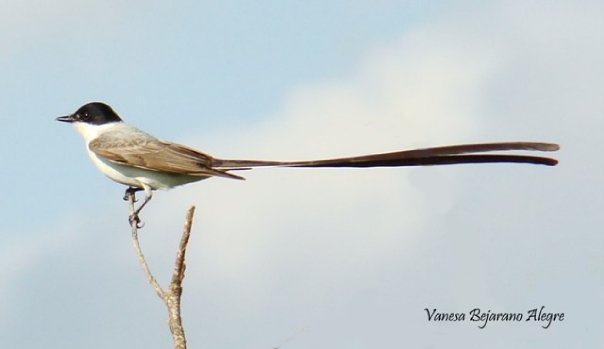
The Fork-tailed Flycatcher (Tyrannus savana) is one of the most fascinating birds of South America’s grasslands. With its distinctive forked tail and spectacular seasonal movements, this species has become a key model for understanding the migratory and breeding strategies of Neotropical migratory passerines.
Intra-tropical Migration: More Complex Than Expected
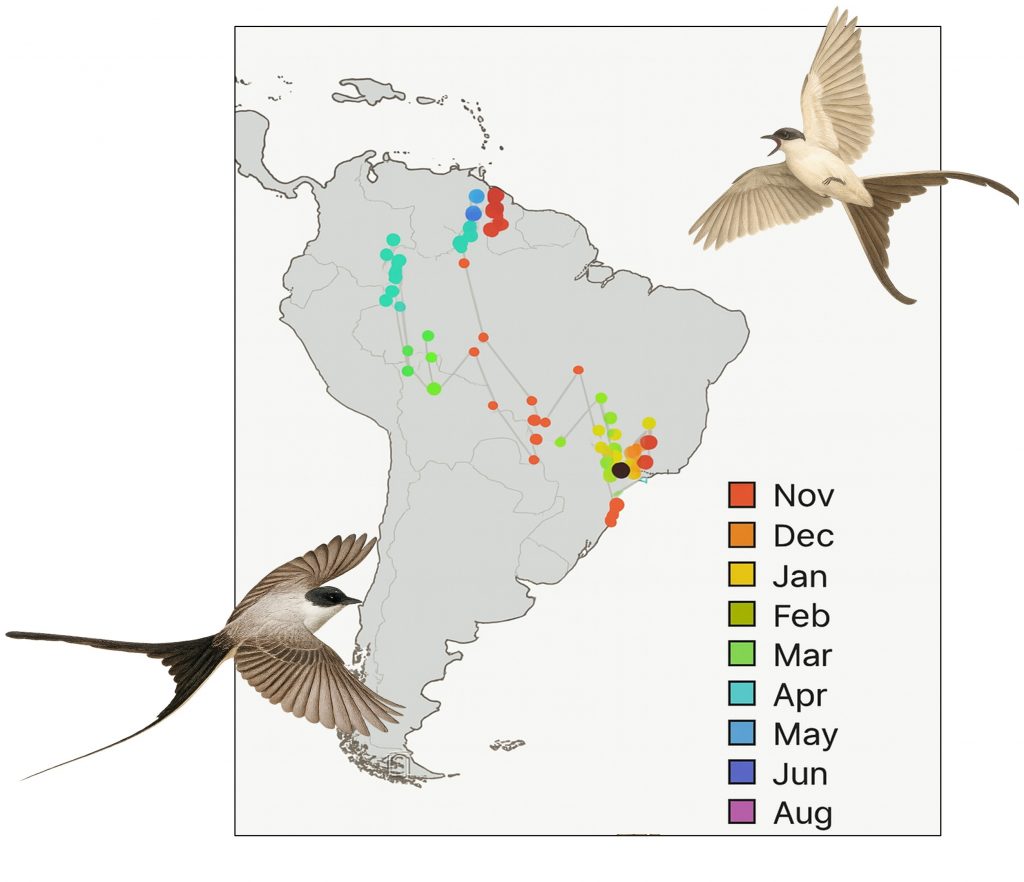 Unlike classic migration patterns between North and South America, the Fork-tailed Flycatcher undertakes intra-tropical migration, moving between tropical and temperate latitudes within South America (Jahn et al., 2016; 2017). Tracking studies using light-level geolocators revealed at least two distinct migration strategies: some individuals migrate directly to their wintering grounds in northern South America. In contrast, others stop for extended periods in Brazil before continuing their journey. Additionally, some individuals use multiple wintering sites, demonstrating notable spatial flexibility (Jahn et al., 2016).
However, these migrations are not without risk. Recent climate projections suggest significant habitat loss in both breeding and wintering areas, with losses of up to 22% in breeding grounds and more than 30% in wintering areas for some populations (El Hindi et al., 2023).
Breeding: Balancing Strategies Across Latitudes
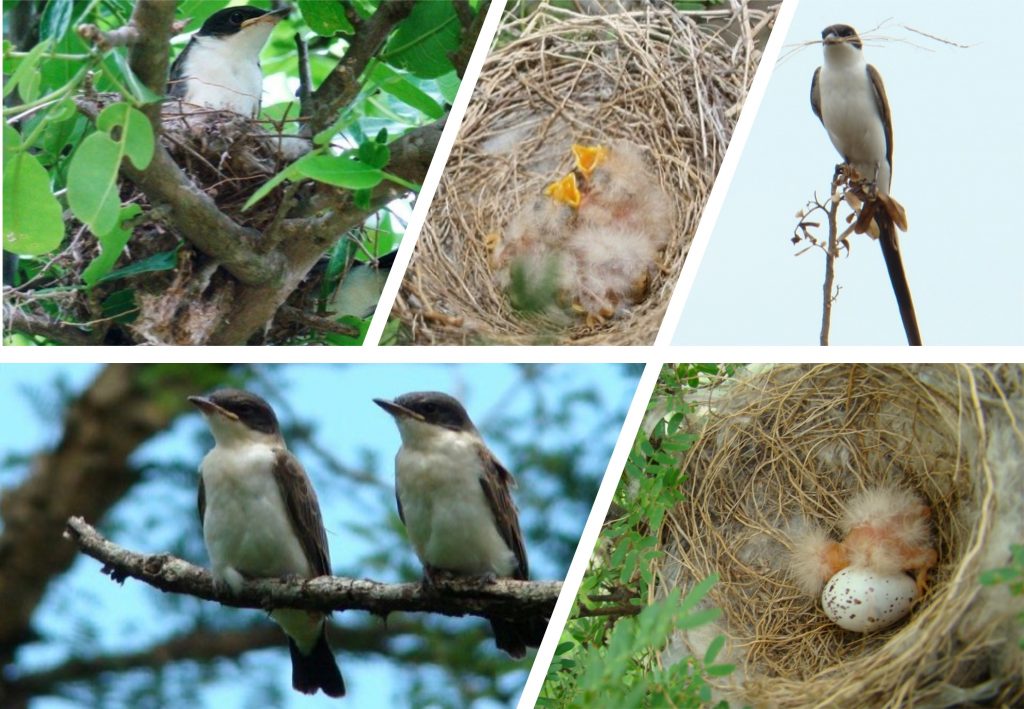
Breeding strategies also vary across latitudes. Populations breeding in temperate regions tend to have larger clutches, mainly due to higher food availability (Jahn et al., 2014). In contrast, tropical populations lay fewer eggs but invest more time in parental care (Marini et al., 2009).
A notable finding is protandry, where males arrive at breeding sites earlier than females. Early-arriving males gain advantages such as access to better territories and higher breeding success. Females also benefit from earlier breeding, as early nesting increases reproductive success (Bejarano & Jahn, 2018).
Feather molt is another critical aspect of the species’ annual cycle. Most individuals undergo a complete molt on their wintering grounds, thus avoiding overlap with breeding or migration (Jahn et al., 2016; 2017; Jahn & Guaraldo, 2018).
Conservation Implications
Research on the Fork-tailed Flycatcher (Tyrannus savana) clearly demonstrates that understanding the full annual cycle, encompassing breeding, molt, migration, and wintering, is crucial for effective conservation. This species relies on a wide range of habitats across South America, making it particularly vulnerable to habitat loss driven by agriculture, urban expansion, cattle grazing, and climate change.
Key regions such as the Brazilian Cerrado, the Pampas grasslands of Argentina and Uruguay, and the Llanos of Venezuela and Colombia are critical for its survival, serving as breeding areas, migratory stopovers, and wintering sites.
Recommended Conservation Actions:
- Safeguard and restore grasslands in southern Brazil, Argentina, Uruguay, and Bolivia to ensure high-quality breeding habitats remain available, particularly in regions with intensive agriculture.
- Maintain and protect stopover sites in areas such as Mato Grosso do Sul (Brazil), where some individuals stop to molt or rest during migration.
- Secure key wintering habitats in northern South America, especially in Colombia, Venezuela, and northern Brazil, where individuals spend the non-breeding season.
- Integrate movement and tracking data into national and regional conservation plans to predict and mitigate risks related to climate change and land-use changes.
- Encourage long-term, cross-border research collaborations focusing on population dynamics, migration routes, and habitat use to guide adaptive management efforts.
- Engage local communities and landowners in grassland regions to promote sustainable land practices that are compatible with the conservation of migratory species.
Why It Matters: Without coordinated efforts across the entire migratory range, especially between tropical and temperate regions, species like the Fork-tailed Flycatcher could continue to face population declines, driven by fragmented landscapes and shifting climate conditions.
Interested in learning more?
If you are studying the Fork-tailed Flycatcher, planning to work with this species, or want to learn more about its fascinating ecology and migration, feel free to reach out! I’d be happy to connect with researchers, students, or anyone curious about this incredible Neotropical bird.